
Neuroblastoma is a kind of cancer that occurs in young children. It begins in special nerve cells which continue to develop. These are what are referred to as neuroblasts. In the majority of cases, the onset of this cancer is in the belly, in the region around the adrenal glands. Adrenal glands are located above the kidneys.
This cancer may also begin at the neck, chest or spine. It occurs when the growth of these young nerve cells is in the wrong direction. They do not become healthy nerves, but become cancer cells.
Neuroblastoma is the prevalent type of cancer in infants below the age of one year. It is predominantly among children under five years. It is a bit more common in boys as compared to girls.
What are Signs of Neuroblastoma
If you speak to parents who’ve gone through this, many say the early days felt like trying to solve a puzzle with missing pieces. Nothing seemed “serious” at first.
In some cases a parent may observe that his or her child has a swollen belly or a firmer belly than normal. Perhaps they picked up the child and picked back the lump unconsciously. A tumour in the chest is different, with coughing which does not make sense at all, or a sort of laboured breathing which the parent subconsciously understands is not normal.
The neuroblastoma around the spine is another source of concern. A child who used to run around will no longer walk or continue insisting that he or she needs to be carried. Their legs could be weaker, and parents suppose it is some slight injury until it does not disappear.
Perhaps the most unique of signs, and one in which many a parent would discuss later on, is the dark circles round the eyes that resemble bruises. In other cases the eyes appear to be slightly protruded. It is not nice to watch, and it usually makes the family consult doctors.
Neuroblastoma Symptoms
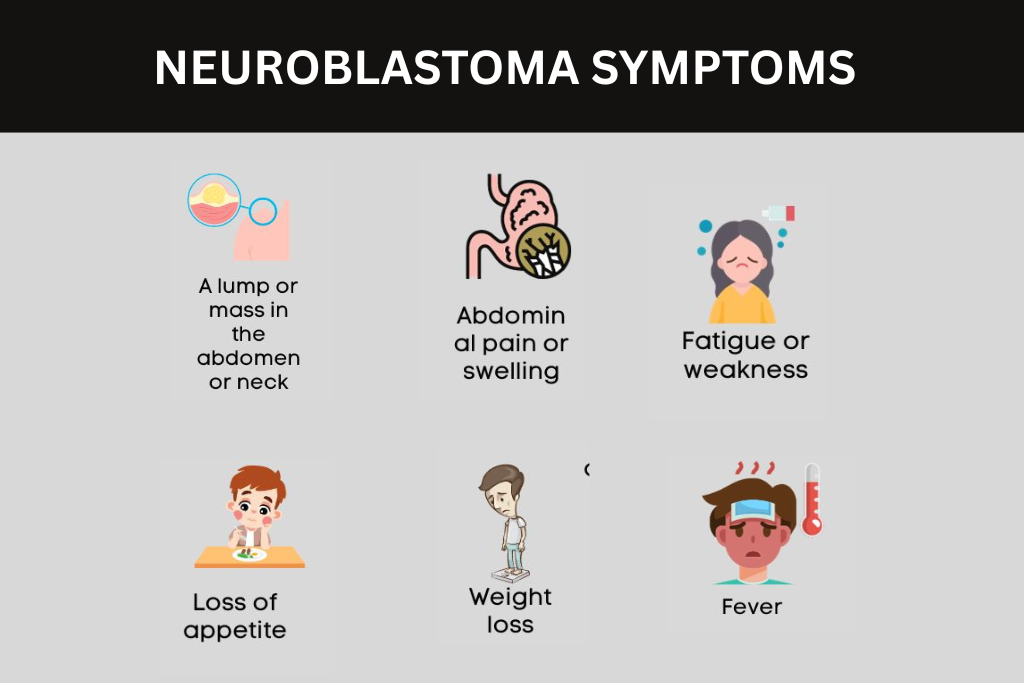
Kids aren’t always able to explain what hurts, so parents rely on subtle changes. Some children become unusually tired. They stop playing, cling more, and nap more. A fever comes and goes for weeks, and no syrup seems to help.
A few children lose weight even though nothing has changed at home. Their appetite slowly drops. Bone pain is another symptom—hard to catch unless the child cries when lifted or avoids putting weight on one leg.
In some cases, diarrhoea becomes persistent. Blood pressure rises, though this is usually picked up at the hospital, not at home. Hard lumps under the skin might appear too, especially when the cancer has spread.
Not every child has all these signs, but even one or two lasting symptoms are worth checking.
Why Some Children Get Neuroblastoma
This is the hardest part for most families: there isn’t a clear answer. Doctors know that neuroblastoma happens mostly in very young children. They know that only a tiny number—maybe 1 or 2 out of 100—inherit a gene that increases risk. They know it’s slightly more common in children of European descent.
But in most cases, it simply happens. No mistakes by parents, no food, no activity, no exposure that caused it. It’s one of those conditions where guilt sneaks in even though it shouldn’t.
How Neuroblastoma Treatment Done
Treatment depends on the child’s age, the tumour’s size, and whether the cancer has travelled elsewhere in the body.
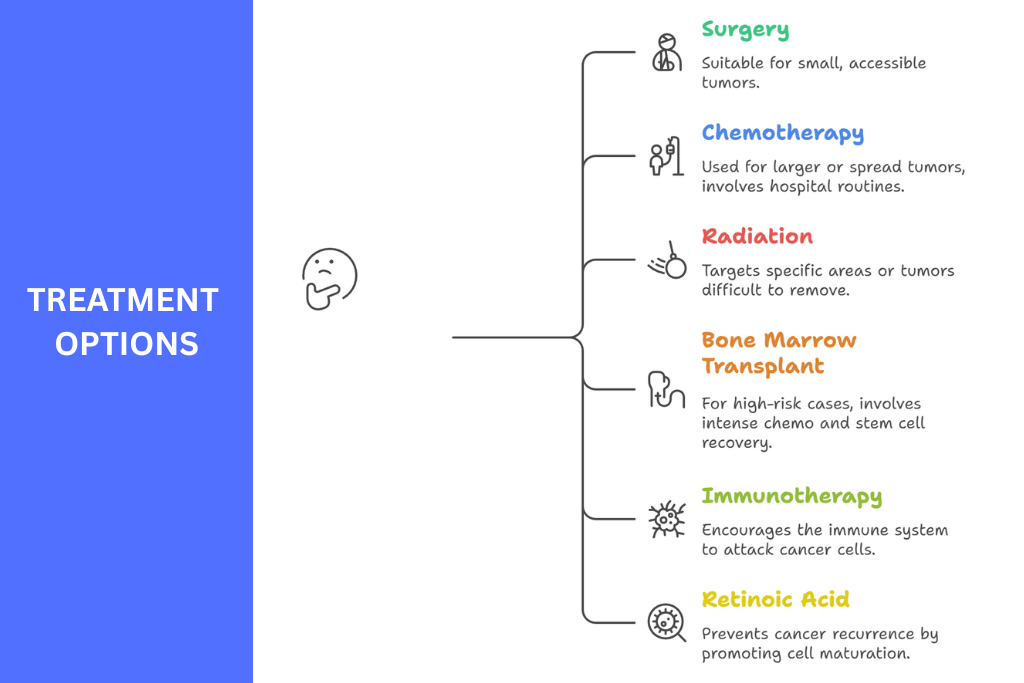
Surgery
If the tumour is small and in a spot surgeons can reach safely, they try to remove it. In a few lucky cases, that’s the only treatment needed.
Chemotherapy
When the cancer is bigger or has spread, chemo comes into the picture. It’s given through an IV, sometimes for months. Most families get used to hospital routines—blood tests, medicines, side effects, hair falling out, and then growing back again.
Radiation
Not every child needs radiation, but it’s used when certain tumours cannot be removed easily or when doctors need to target very specific areas.
Bone Marrow Transplant
High-risk cases need stronger treatment. Doctors first give very intense chemotherapy that clears out cancer cells but also wipes out healthy bone marrow. Then they give stem cells to help the child’s body recover.
Immunotherapy
This is one of the newer options. The child’s immune system is encouraged to recognise and attack cancer cells. It has helped many children with high-risk disease.
Retinoic Acid
Once the heavy treatments are done, this medicine helps stop the cancer from coming back by encouraging the leftover cells to mature properly.
Chances of Recovery
The Neuroblastoma prognosis depends heavily on a child’s age and how far the cancer has spread.
Babies under one year old respond amazingly well. If the cancer is found early and hasn’t travelled far, the success rates are extremely high. Children in the low-risk category recover more than 95% of the time. Those in the intermediate group also do very well—usually between 90 and 95%.
High-risk neuroblastoma is more challenging, but even then, modern treatments have helped around half of the children overcome it.
There’s also a special stage called 4S, seen in infants. In some surprising cases, these tumours shrink or disappear with minimal treatment, which feels almost like a small miracle to the families involved.
Where Families Find Expert Help
In Delhi NCR, many parents trust Dr Nandini Choudhury Hazarika, a paediatric oncologist who has been treating childhood cancers for nearly two decades. She has performed more than 150 bone marrow transplants and has trained at leading centres across India.
She sees children at:
- Madhukar Rainbow Children’s Hospital, Malviya Nagar, Delhi
- Dr Nandini Hazarika Clinic , Saket, South Delhi
Parents who need guidance or an opinion can contact her at +91-96508 06846.
A Little Hope for Families Going Through This
No parent is looking into the future of paediatric cancer. It is something unexpected that makes the families alter their habits, their priorities, and their vision of the strength. But there is real hope. Children who are diagnosed and treated early survive cancer (more than 80 per cent).
The treatment will take months; sometimes it will take longer than a year. Days are difficult and better days. However, as many parents later mention, doctors, nurses, and other families they encountered on the way helped them to make the trip easier to bear.
When something does not strike you about your child, then you should have it checked. Attention at an early stage is all.
Frequently Asked Questions (FAQs)
Q1. What causes neuroblastoma?
It has no known cause. The majority of the cases occur without family history or a trigger. Few of them are associated with genetic modification.
Q2. Can it be cured?
Yes. Most children – particularly the low- or intermediate-risk group – recover completely. The survival rates, even in high-risk cases, are on the increase.
Q3. How long does treatment last?
Between six months and two years, based on the level of risk.
Q4. What are some of the early symptoms children should watch out for?
Belly swelling, lumps, bruising of the eyes, pains in the bones, fatigue, fever that can never clear up, loss of weight, difficulty walking, and anything that does not go away should be recommended to the doctor.
Q5. Is neuroblastoma common?
It is an uncommon cancer in general and is the most prevalent in children below the age of one year.