
When parents first hear the word Retinoblastoma, everything inside feels a bit shaky. Nobody plans for eye problems in tiny kids. And when it comes suddenly, it just feels too much. So here, this whole thing is written in a slow, simple way. Almost how one mother tells another mother at the park. The goal is only that families understand what retinoblastoma is, what to look for, and where help is found.
What is Retinoblastoma
Some children, very small ones, get a rare eye trouble called Retinoblastoma. Parents who ask what retinoblastoma is usually hope it’s something small, but it is a growth inside the eye, the part that helps the child see shapes, pictures, and colours. It starts quietly. Kids jump around, play with blocks, laugh… and families don’t notice anything strange in those early days. Then one morning or one photo with flash shows an odd shine, and everything changes.
Types of Retinoblastoma
The doctors attempt to make matters easy for the parents in explaining the kinds of retinoblastoma. Although the names are complex-sounding, the concept is a simple one.
1. Retinoblastoma in One Eye (Unilateral)
This type occurs when the tumour is located in one eye. It tends to be more prevalent and is usually diagnosed somewhat later due to the fact that parents are not always able to notice changes quickly. Therapy is aimed at salvaging the eye of the affected and safeguarding the general health of the child.
2. Retinoblastoma in Both Eyes (Bilateral)
This type of cancer occurs in both eyes concurrently. Treatment is more cautious among the doctors as they would wish to preserve as much of the vision as possible. It can manifest itself at a younger age and can be associated with a family-run gene change.
Why These Types Matter
Even if the words “types of retinoblastoma” sound scary, parents mainly need to know which type their child has. It assists the doctor in making the appropriate decision in which the way of treating the tumor, the way of safeguarding the sight, and the follow-ups required.
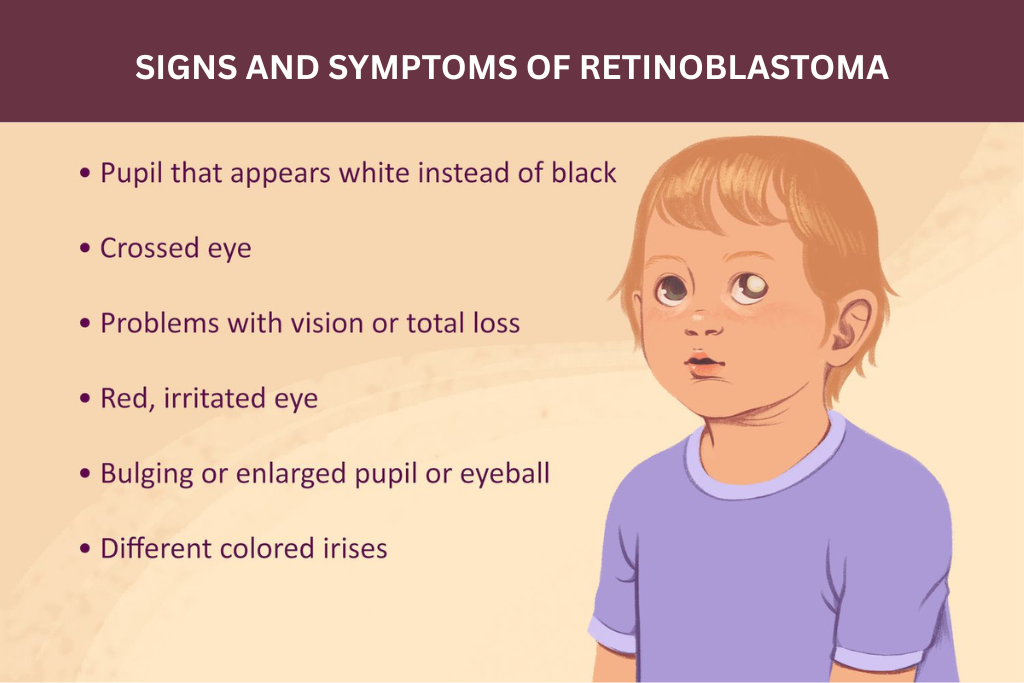
Signs and Symptoms of Retinoblastoma
Understanding the signs and symptoms of retinoblastoma can be confusing because many children don’t feel pain or complain, even when something is wrong inside the eye. This cancer grows quietly, so the early clues can be very soft and easy to miss.
1. A Shiny or White Glow in the Eye
One of the most common signs is a strange white reflection in the pupil. Parents often notice this in photos taken with flash, where one eye looks normal and the other eye shows a white glow. This is usually the first moment when something feels “not right.”
2. Eyes Pointing in Different Directions
Another sign is when one eye turns inward or outward while the other stays straight. It may seem like a squint or “lazy eye,” but sometimes it’s actually one of the early signs and symptoms of retinoblastoma.
3. The Eye Appearing Bigger or Swollen
In some cases, the affected eye may look slightly larger, swollen, or firmer than usual. Kids rarely complain of pain, but parents may notice something odd when looking closely.
4. Hard to Notice, Easy to Miss
The tough part is that the signs and symptoms of retinoblastoma grow slowly and hide in everyday life—between school, playtime, naps, and smiles. Most families discover it accidentally, often while scrolling through old photos and spotting that unusual white glow.
Causes of Retinoblastoma
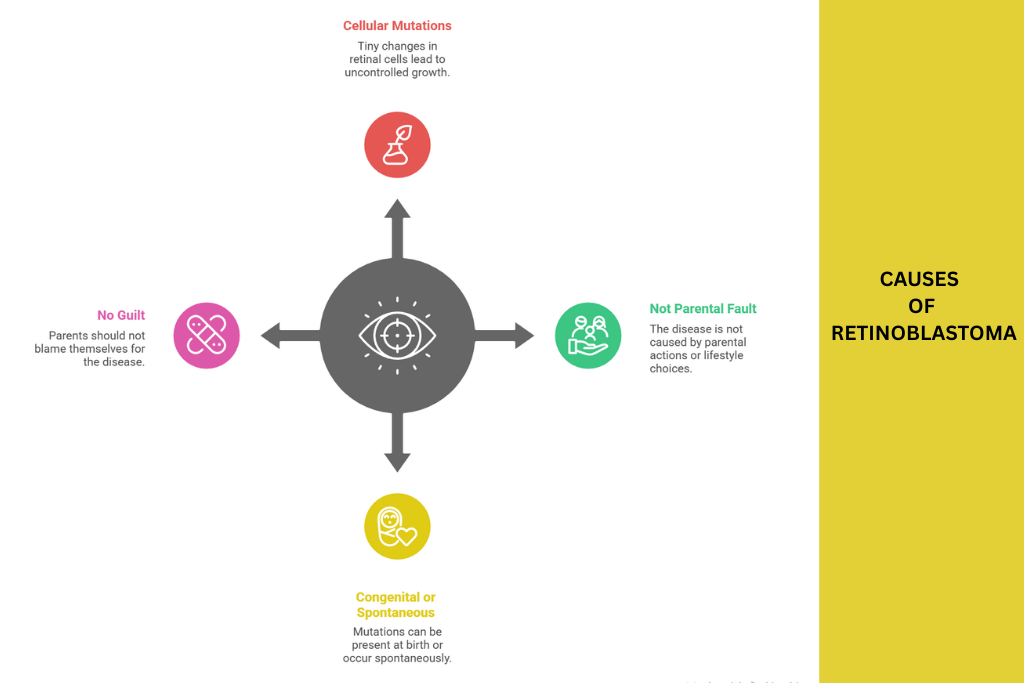
Many parents ask with a trembling voice, “Why did this happen to my child?” Understanding the causes of retinoblastoma is important, but it’s equally important for families to know that it is not their fault.
1. Tiny Changes in the Eye’s Cells
The real causes of retinoblastoma are very small changes—mutations—in the cells of the retina. These changes make the cells grow in a way they shouldn’t.
2. Not Caused by Anything Parents Did
Doctors gently explain that the causes of retinoblastoma are not related to screen time, mobile phones, cartoons, outside play, diet, or any mistake by the parents. Nothing a mother or father did- or didn’t do – triggers this disease.
3. Sometimes Present From Birth
In some children, the mutation is present from birth. In others, it happens suddenly on its own. Most cases are not inherited, and it can occur even when no one in the family has ever had it.
4. No Place for Guilt
Parents should never blame themselves. The causes of retinoblastoma lie deep in the biology of the eye, not in parenting. Families deserve comfort, not guilt, as they focus on helping their child get better.
How Doctors Find the Problem: Retinoblastoma Diagnosis
Eye checks, lights, scans… that’s how doctors look inside. This is called retinoblastoma diagnosis, and it helps them see how big the problem is. Kids sometimes get sleepy during exams, so doctors do everything gently. Parents sit close by because it all feels scary even though the child is okay. The retinoblastoma diagnosis steps help doctors pick the right treatment plan.
Understanding Retinoblastoma Prognosis
When things settle a bit, families want to know the future. Doctors call this the retinoblastoma prognosis, which means how well the child might do later. Many parents feel scared, but the retinoblastoma prognosis is often hopeful, especially when the problem is caught early. Kids bounce back better than grown-ups expect. Many go to school, run around, and do normal things as they grow.
Treatment Ways: Retinoblastoma Treatment in Delhi
Many parents look for retinoblastoma treatment in Delhi because the city has strong hospitals and trained teams. Some kids need small procedures, some need medicine, and some need special light or cold treatments. The idea behind retinoblastoma treatment in Delhi is simple: save the child’s life, protect as much vision as possible, and keep the child comfortable through the journey.
Some children need long plans, some need shorter ones. Doctors adjust everything step by step.
A Simple Walkthrough for Parents
Most journeys look like this:
• First, a strange shine in photos
• Parents feel something is not right
• They visit a doctor
• More tests happen
• Treatment starts
• Child slowly gets better
Families don’t want long words. They want calm minds and clear steps, and this path usually helps them understand what’s going on.
How Parents Can Help Emotionally
Kids don’t understand the machines or the hospital smell. They just look for a familiar hand. So parents can help by:
• holding hands
• telling soft stories
• keeping the child calm
• being patient
• staying close during tests
Sometimes parents cry alone in bathrooms or in cars because it hurts to watch their child go through this. But showing steady love gives the child a strong feeling of safety.
Why Early Checks Matter
Tiny things—like an odd glow in a picture—can mean a lot. Early help often protects the eye and vision. Many families wait, thinking it’s nothing, but early checks make a huge difference. They save time. They save eyes. Sometimes they even save lives.
Why Dr. Nandini?
Dr. Nandini Choudhury Hazarika is a children’s cancer doctor in New Delhi with almost twenty years in this field. She has taken care of many little ones with blood cancers, solid tumors, brain troubles, and she has done more than 150 bone marrow transplants for kids with thalassemia, aplastic anemia, leukemia, lymphoma, neuroblastoma, and other tough illnesses.
She trained in Assam, Bangalore, Guwahati, Mumbai, and even the USA. She has worked at major hospitals like Prince Aly Khan Hospital, Max Hospital, Fortis, and now at Madhukar Rainbow Children’s Hospital. She is part of many medical groups, has written research papers, won awards, and helped shape better cancer care for children. Parents say she explains things slowly, kindly, and treats every child with patience.
Frequently Asked Questions (FAQs)
Q1. Can Retinoblastoma be noticed at home?
Sometimes yes. Many parents first see a white shine in the child’s eye in photos.
Q2. Does it hurt the child?
In the beginning, no. Kids may act totally normal, which is why parents need to watch small signs.
Q3. Can both eyes be affected?
Yes. Doctors always check both eyes carefully.
Q4. Will my child see normally later?
It depends on early care. Many kids keep good vision when treatment starts soon.
Q5. Is the treatment long?
It depends on the child. Some require short plans, while others require longer ones.