
Platelets are small, minute cells in our blood, yet they have a very large task. They assist in the clotting of the blood in case of injuries. When a person has a platelet disorder, the blood will not clot as it should. Even minor lacerations may bleed profusely, bruises are easily noticeable, and at times it is severe, and even you are unaware. Here we are going to discuss the types of platelet disorders, platelet disorders symptoms and complications of platelet disorders because many parents do not realize it on time.
Dr. Nandini Choudhury Hazarika, a very well-known Pediatric Medical Oncologist and Hematologist in New Delhi, has treated children with all kinds of blood problems for more than 20 years. She has done over 150 bone marrow transplants for both malignant and non-malignant conditions. She is aware of the behaviour of platelets and what can go wrong when they fail to perform their duties.
What is a Platelet Disorder?
A platelet disorder happens when platelets don’t work properly or there are too few of them. Platelets are the cells that form clots. When they are low or have platelet dysfunction, even tiny scratches can bleed longer than normal.
Sometimes kids are born with platelet problems. In some cases, individuals acquire it in the future due to infection, medications, or other illnesses. Parents are used to neglecting minor bruises or nosebleeds, but they may be indicators of a platelet disorder.
You know, sometimes you see a child with red spots on the skin or bruises that don’t make sense, and you think, “they just fell.” But it could be something more serious, a platelet problem that needs checking.
Types of Platelet Disorders
There are many types of platelet disorders, and honestly, it can be confusing. But if we keep it simple, there are mainly two types:
1. Quantitative Platelet Disorders – Number Problems
This is when the platelet numbers are too low or too high.
- Thrombocytopenia: This is a low platelet count. Kids or adults with this can bruise very easily, bleed from the nose or gums, and even bleeding from cuts takes longer to stop.
- Thrombocytosis: This refers to increased platelet count. It is not common in children but it may occur. The excessive number of platelets may lead to clots, which is not good for the brain or the heart.
2. Qualitative Platelet Disorders – Function Problems
The number is good sometimes, yet platelets do not work. This is referred to as platelet dysfunction.
- Glanzmann Thrombasthenia: An Infrequent hereditary disease. The platelets do not stick to each other and hence, there does not occur proper clotting..
- Bernard-Soulier Syndrome: Platelets are bigger than normal and cannot clump together.
- Storage Pool Disease: Platelets cannot release the chemicals needed to stop bleeding.
Platelet Disorder Symptoms
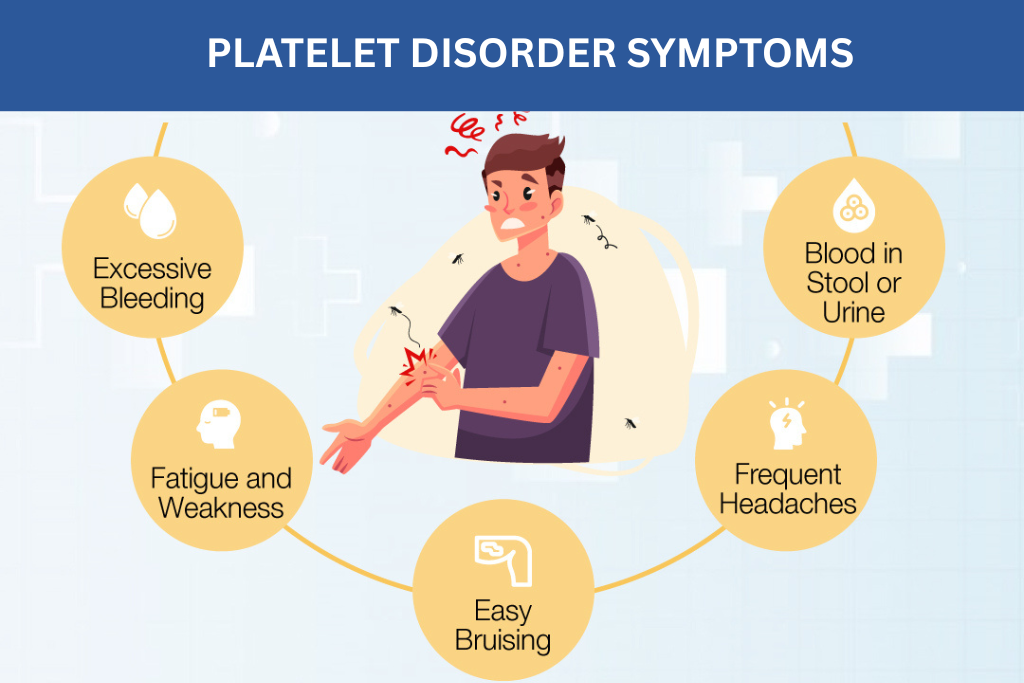
Platelet disorder symptoms are often subtle, especially at first. Some common ones to notice:
- Bruises that appear easily, without any reason
- Nosebleeds or bleeding gums
- Heavy periods in girls
- Red or purple spots on the skin (petechiae)
- Cuts or scratches that bleed longer than usual
Sometimes platelet dysfunction doesn’t show until surgery or injury. A parent might say, “Oh, she just bled more than usual from a small cut.” But that small thing can be a warning sign of a platelet disorder.
Also, sometimes children feel completely fine. They run around, play, and act normal. But the first thing you notice may be a bruise or small nosebleed. That’s why parents need to be careful and check with a doctor if unusual bleeding happens.
Causes of Platelet Disorders
Platelet problems happen for many reasons. Here are the main ones:
- Inherited conditions: Some children are born with platelet disorders. This is why family history is important.
- Bone marrow problems: Diseases like leukemia or aplastic anemia can affect platelet production.
- Medications: Some medicines, including chemotherapy drugs, can lower platelet counts.
- Infections: Viral infections like dengue or hepatitis can temporarily lower platelets.
- Autoimmune diseases: Sometimes the body attacks its own platelets.
Dr. Hazarika has treated children with all of these causes. She often tells parents, “Don’t wait for a big problem, come check early.” Because early care can make a huge difference.

Complications of Platelet Disorders
Ignoring a platelet disorder can be dangerous. Here are some complications of platelet disorders that can happen:
- Excessive bleeding: Even minor cuts can bleed too much.
- Internal bleeding: Bleeding in the brain or stomach can be life-threatening.
- Joint problems: Repeated bleeding in joints can cause swelling and pain.
- Anemia: Losing blood repeatedly can cause low red blood cells.
- Clots: Some disorders cause too many clots, which can be very dangerous.
A family once came to Dr Hazarika after their child had a nosebleed that didn’t stop for hours. Tests showed a serious platelet disorder. If they had waited longer, the outcome could have been worse. This shows why knowing the complications of platelet disorders is crucial.
Diagnosis
Diagnosing platelet disorders is not complicated, but it needs proper tests. Doctors usually start with:
- CBC (Complete Blood Count) – checks how many platelets are there
- Peripheral blood smear – looks at shape and size of platelets
- Platelet function tests – see if platelets are working properly
- Bone marrow test – if platelets are not being made properly
Dr Nandini Hazarika has been observing rare platelet diseases among children that majorities of hospitals fail to detect. The initial action in treatment is proper diagnosis.
Treatment
The forms of treatment are based on the nature of the disorder. Here’s what can be done:
- Medicine: Certain drugs stimulate an augmentation of platelets or prevent immune attacks.
- Platelet transfusion: Serious bleeding or preoperative.
- Bone marrow transplant: In serious maladies such as aplastic anemia or leukemia.
- Lifestyle care: Prevent injuries, be mindful of day-to-day activities.
Dr Hazarika has used all these techniques in treating children. Transplants of the bone marrow especially, have been saving lives.
Living With Platelet Disorders
Life with a platelet disorder can be normal if you take precautions:
- Avoid injuries or rough sports
- Use soft toothbrushes, avoid sharp objects
- Go to the doctor if bleeding happens often
- Regular check-ups are important
Support from doctors and family is very important, especially for children. Dr. Hazarika often says, “Parents are the first line of care.”
Preventing Complications
Even if we cannot prevent inherited platelet disorders, we can reduce complications of platelet disorders by:
- Early diagnosis and treatment
- Avoiding medicines that lower platelets
- Vaccinations to prevent infections
- Following the doctor’s advice carefully
Real-Life Advice
It is not always only about medicine. Parents usually pose the question, What can I do at home? Here are some tips:
- Keep a first-aid kit ready
- Bleeding points or bruises on the cheeks.
- Note bleeding nosebleeds, gingival or excessive bruising.
When your child is prone to being infected, you are not supposed to go out to places with many people.
Frequently Asked Questions (FAQs)
Q1. Are platelet disorders curable?
There are those that cannot be fully cured, particularly inherited ones but a majority can be treated with medication or treatment.
Q2. Do platelet disorders occur frequently in children?
Yes, there are more prevalent forms among children particularly inherited and dengue-induced infection.
Q3. What does platelet dysfunction mean?
It is when platelets are of normal size but fail to perform their functions properly in contrast to a low platelet count.
Q4. When should I see a doctor?
Ask the doctor whether it is bruises, nosebleeds, bleeding gums, or little red dots. Through early care, Platelet disorders bring about serious complications.
Q5. Will a bone marrow transplant be beneficial?
Yes, in extreme conditions such as aplastic anemia or leukemia, it can be employed. Dr. Hazarika has already performed over 150 successful transplantations.