
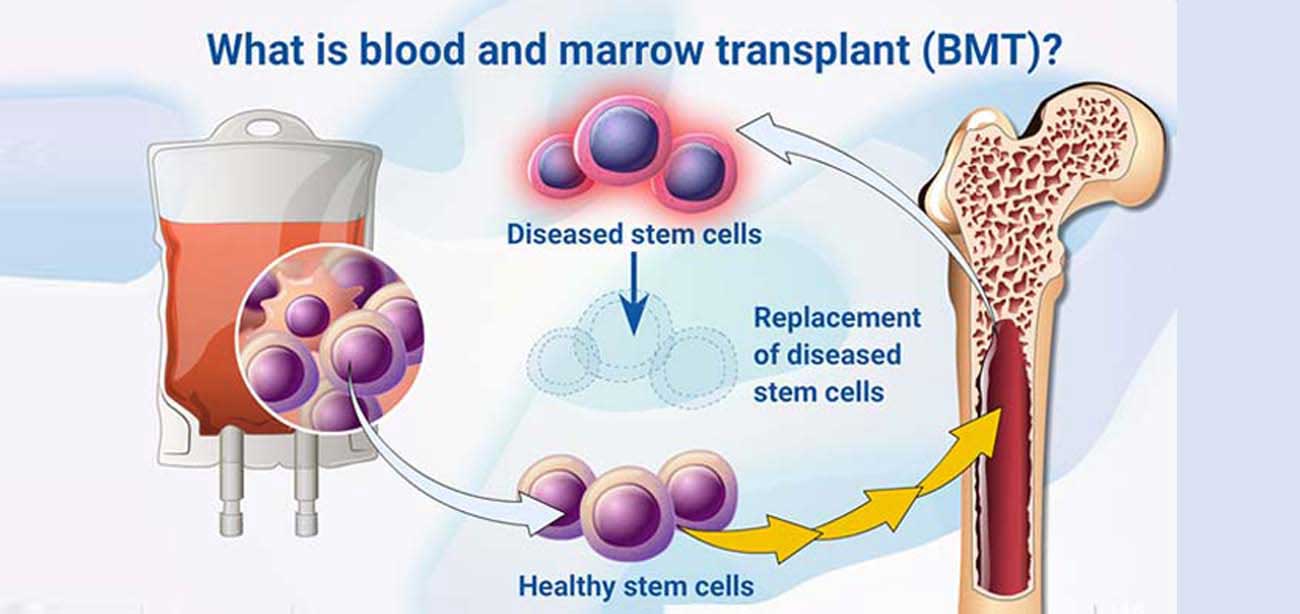
What is a paediatric bone marrow transplant?
Bone marrow is the spongy material in the center of the bones that produces all types of blood cells, including stem cells, which are young blood cells. Bone Marrow Transplant (BMT) involves filtering stem cells and reinserting them into the same child. Or they are transferred to another sick child. These stem cells will develop into new, healthy bone marrow.
The goal of bone marrow transplantation is to replace a child’s diseased bone marrow with healthy bone marrow.
Why is BMT performed in Children?
The goal of BMT is to cure many diseases, including cancer and some non- cancerous conditions where there are no other curative treatment options available.
There are two types of BMT- autologous and allogeneic.
In autologous BMT, patient’s own stem cells are used after high dose chemotherapy as rescue. This is mostly used for treating relapse Lymphoma, high risk neuroblastoma, high risk brain tumors etc.
In allogeneic BMT the patient’s bone marrow is replaced by healthy donor stem cells. Before replacing, very high dose chemotherapy and sometimes radiation therapy is also used to kill all the bone marrow cells of the patient, so that patient’s bone marrow can accept the new healthy stem cells and new stem cells can proliferate to produce new healthy cells. This is done to treat diseases like leukemia which are high risk and don’t respond to the routine treatment and some non- cancerous conditions of blood like Thalassemia, sickle cell anemia, aplastic anemia, congenital immune deficiency, congenital metabolic disorders etc.
What are the risks of a child receiving a bone marrow transplant?
A bone marrow transplant carries risks, some of which are fatal. Before the procedure, your child’s healthcare provider and the BMT team will go over the risks and benefits with you. And it can be treated by specialized pediatric oncologists and hematologists.
The following factors may influence the risks and complications:
- The type of BMT
- The disease being treated by the transplant
- What medications are used prior to the transplant?
- The age and overall health of your child
- Differences in tissue matching between donor and recipient
How do I help my child in preparing for a bone marrow transplant?
Prior to the transplant:
The bone marrow transplant team evaluates your child thoroughly. The team will discuss the risks and benefits of transplant and other treatment options with you.
Your child will be subjected to physical examinations and tests. The tests examine your child’s blood as well as organ functions such as the heart, kidneys, liver, and lungs.
Your child may be required to visit the transplant center up to ten days before the transplant. A central venous line is a thin, flexible tube (catheter) that is surgically implanted in a vein in your child’s chest. The catheter will be used to administer blood products and medications.
Dr. Nandani is a renowned best pediatric cancer specialist in Delhi NCR, India, and can provide expert
care and guidance to families dealing with paediatric cancer. Early treatment is critical for improving outcomes and quality of life in children with cancer.