

Thalassemia is a hereditary blood disease characterising the problems of the human body in the formation of healthy red blood cells. Oxygen, which is inhaled in the lungs, is transported by red blood cells to the various sections of the body. The level of red blood cells produced is low in the body of people whose Thalassemia may result in anaemia, fatigue and other health complications.
It is an inherited condition, and that is it is passed on as a hereditary condition between parents and their children as a result of genes. It prevails in South Asian, Middle Eastern, African, and Mediterranean people. Thalassemia early diagnosis and appropriate treatment are also of importance to control the condition and make patients live healthy lives.
Thalassemia Causes and Effects
Thalassemia is a condition that develops as a result of gene mutations that participate in the manufacture of haemoglobin or oxygen-carrying protein in red blood cells. This mutation will result in less production of haemoglobin and a decline in the number or a reduction of the number of red blood cells.
The effects of Thalassemia vary depending on the type and severity. Some common effects include:
- Severe anaemia and fatigue
- Weakness and delayed growth in children
- Enlarged spleen or liver
- Bone deformities, namely on the face and skull.
- Heart issues in serious form.
Thalassemia Causes, Symptoms, and Treatment
Causes:
Thalassemia is mainly genetic. When both parents happen to be the bearers, the offspring will have gained Thalassemia. The related gene may place the kid in the position of being a carrier in case only one of the parents is the carrier, which occurs as Thalassemia minor.
Symptoms:
Depending on the type of Thalassemia, the symptoms will differ:
- Mild Thalassemia: No or light symptoms are generally observable, or mild anaemia.
- Severe Thalassemia: Weakness, fatigue, pallor, retarded growth, malformed bones, and enlarged spleen.
Treatment:
The treatment of Thalassemia depends on the level of the disease:
- Mild ones: They do not necessarily require any treatment unless it is after a routine check-up.
- Moderate to severe: It can provide routine blood transfusions to treat iron chelation therapy to avoid iron overload and, in rare cases, bone marrow or stem cell transplants.
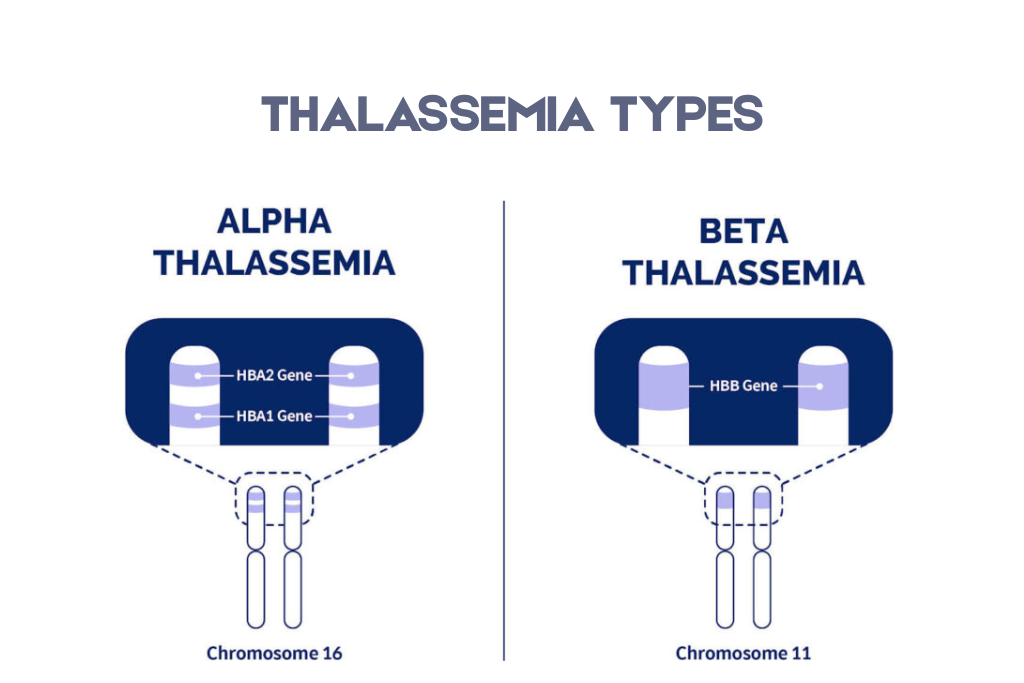
Thalassemia: Types
Different types of Thalassemia, primarily depending on the chain of haemoglobin which is affected:
Various forms of Thalassemia
- Alpha Thalassemia: The deficiency or a decreased production of alpha-globin chains triggers the condition. It ranges from mild to severe.
- Beta Thalassemia: This is an issue which causes muting of beta-globin chains. Serious types might require regular blood transfusions.
- Thalassemia Major vs. Minor:
- Thalassemia Major: A serious type, which is typically identified at a young age, needs frequent treatment.
- Thalassemia Minor: A carrier condition, usually asymptomatic, is a mild disease.
What is Thalassemia Syndrome?
The combination of the symptoms produced by Thalassemia is called Thalassemia syndrome. They can be anaemia, bone anomalies, retarded growth, and swollen organs.
Thalassemia Screening
Screening for Thalassemia is important to detect carriers and prevent the severe form in children. Common tests include:
- Blood tests: Blood tests are done to check the haemoglobin to evaluate the health of the red blood cells.
- NESTROFT Test for Thalassemia: Thalassemia is a simple and inexpensive screening test that is applicable to numerous hospitals. Good tests might have to be followed up.
Can Thalassemia be Prevented?
Thalassemia is a genetic disorder which is inherited and therefore cannot be fully avoided as it is an inherited disorder. However, there are options to reduce the risks of spreading the transmissions to children:
- Genetic counselling of couples before marriages or before conception.
- Prenatal screening and testing
- Avoiding marriage between carriers of the defective gene
Thalassemia Prevention and Control
The use of proper prevention and control measures such as health check-ups, specific awareness programmes, and timely medical intervention should be important. The parents interested in having a family are advised to contact a member of a Thalassemia specialist.
How to Prevent Thalassemia
- Carrier screening before marriage or conception
- Prenatal testing during pregnancy
- Regular health monitoring if you are a carrier
Is Thalassemia a Cancer?
No, Thalassemia is not a cancer. It is a hereditary disease of blood. Nevertheless, it has consequences on the health of blood, and therefore it may need special care from a Thalassemia doctor or Thalassemia expert.
Thalassemia Treatment in India
India has developed Thalassemia management facilities. Treatment options include:
- Blood transfusions
- Iron chelation therapy
- Stem cell transplant or bone marrow.
Patients can also consult the doctors like Dr Nandini Choudhury Hazarika, who is a renowned paediatric medical oncologist and haematologist in New Delhi. She has been trained in the treatment of blood disorders for more than 20 years and has more than 150 bone marrow transplants under her arm.
Best Doctor for Thalassemia in India
Dr Nandini Choudhury Hazarika is known as a paediatric haematology and oncology specialist. She is currently working at Madhukar Rainbow Children Hospital, New Delhi, and giving consultations to thalassemic patients.
Thalassemia Doctors in Delhi
Besides Dr Hazarika, many such specialised centres for Thalassemia are present in Delhi, where patients can avail care and expert opinion with respect to this ailment. Periodic evaluation by a specialist helps with monitoring the symptoms and preventing complications.
A Thalassemia missionary is a haematologist or paediatrician of the haematology branch of medicine who can educate the patients to do proper diagnosis, treatment and management of the condition.
Conclusion
Thalassemia is a lifelong condition of an individual, which, however, with the number of appropriate therapies and permanent control, allows someone to live a full and healthy life. An appointment with a specialist who works with Thalassemia and the use of prescribed brochures of treatment procedures greatly improve the quality of life of patients and their relatives.
Frequently Asked Questions (FAQs)
Q1. What is Thalassemia?
Thalassemia is a blood disorder that is caused by genes so that the body will be producing less blood when this should produce the normal number of red blood cells resulting in anaemia and other health issues.
Q2. Can Thalassemia be cured?
A potential cure of severe Thalassemia is bone marrow transplant or stem cell therapy. Cases with mild cases do not require treatment.
Q3. What Are the Ayurvedic Treatments and Homoeopathy Tests for Thalassemia?
Haemoglobin tests, screening tests such as the NESTROFT test, and blood tests Genetic tests can be carried out to establish.
Q4. Is Thalassemia the same as blood cancer?
No, Thalassemia is not a cancer. Caused by a genetic mutation of erythrocyte, it affects the red blood cells.
Q5. Is Thalassemia Preventable?
Cystic fibrosis is something that is not avoidable in its entirety, but genetic counselling, screening for the carrier’s status and prenatal testing can be used to help lower the likelihood of transferring it to offspring.